
Doing the dishes
🫧🫧🫧🫧🫧🫧

This is what happens when I take a semester off and spend that time going to therapy and doing yoga. Really sorry but lowkey love is prosperous and the wonders of life are never ending… Maybe soon I’ll write about heartbreak, but I think joy deserves a platform.
+ free Palestine!!!!!
A sink full of dishes produces bodily symptoms in me likened to those of mild influenza, including, but not limited to: chills, fatigue, coughing/gagging, body aches, and vomiting.
This sudden onset of symptoms was usually how I got out of the chore as a kid. When left undone, a sink is a conglomeration of nasty scraps and microbiomes festering away, and over my dead body if you think I’m touching it. If I so much as saw cold oatmeal chunks in the mix, that was the end of it. I couldn’t muster any strength to fight. I instead opted to succumb to my disease by theatrically falling to the ground and dry heaving. Like a roach sprayed with Raid.
My younger brother, Hunter, has obsessive-compulsive disorder like me, and his compulsions manifest in a debilitating disgust for germs. His hands are pale and cracked from his frequent washing. He deep-cleans his room twice a week. His reaction to touching dirty dishes is a rigid body and a quiet, but simple: “I can’t.”
Hunter and I never had a formal discussion about it, but since he was “of age” for the chore, we had an arrangement. I do the dirty dishes, he puts away the clean ones. This is how I let him know I understand.
The feeling of cold dishes and old entrails of food still makes my stomach churn, but it’s become much easier in practice because it’s at my own discretion, out of love.
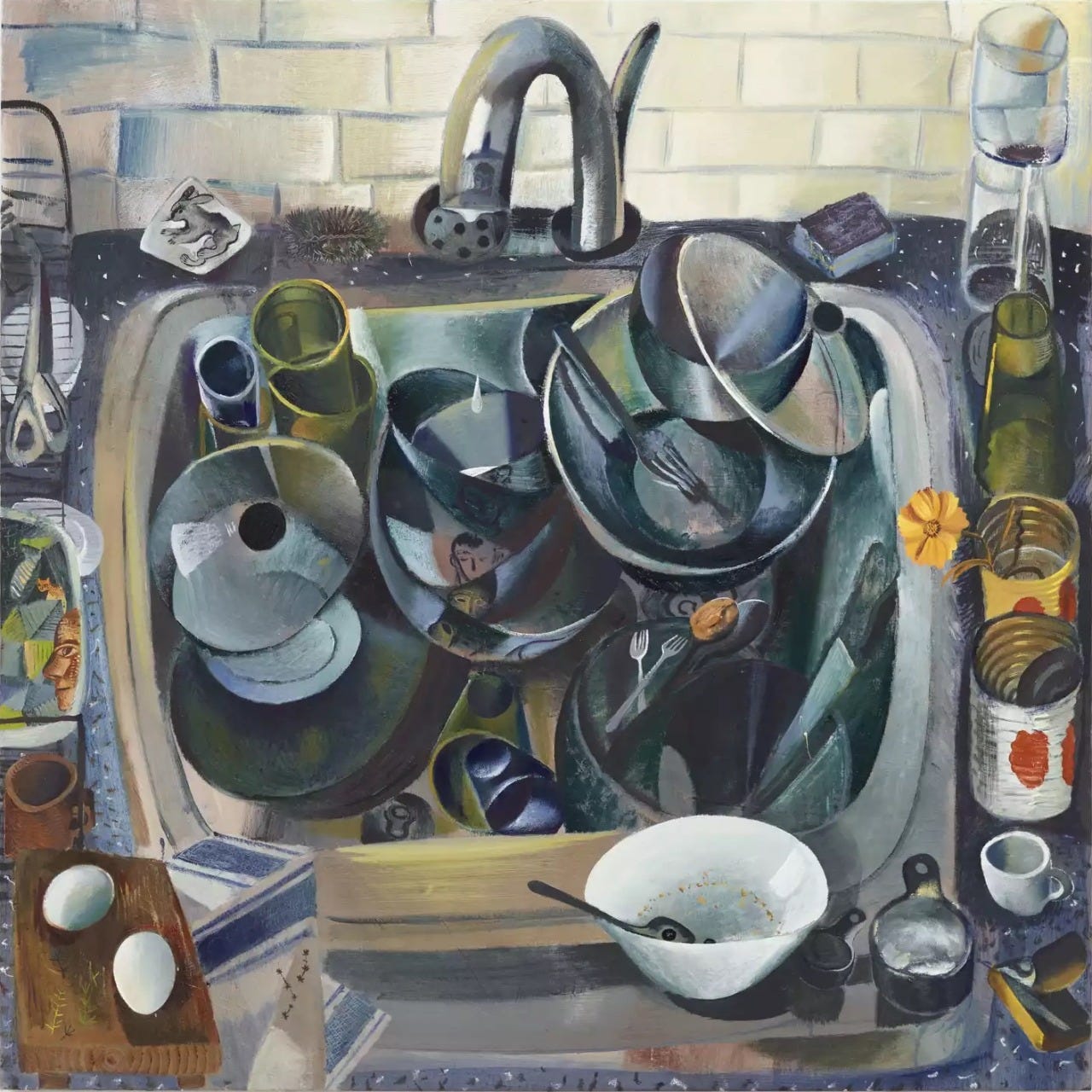
In the literal sense, a sink of dirty dishes represents the ugliness and mess that comes out of eating, an essential part to life. The intimate, but grueling nature of hand washing dirty dishes at home or at a place of work is often conceived to be a plight of the working class. From the late 1950s to early 1960s, “Kitchen Sink Dramas” were a staple to British television. The specials reflected working class disillusionment and desire for improvement in circumstance; Thematically similar to Malcolm in the Middle (2000) and Derry Girls (2018). Despite financial instability and an onslaught of curveballs, the interpersonal dynamics of kitchen sink dramas were always fruitful, giving a hard life meaning.
Writer Emily Zarevich says on kitchen sink realism: “A grimy kitchen sink…is a silent storyteller, a revealing indication of the characters’ impoverished circumstances.”
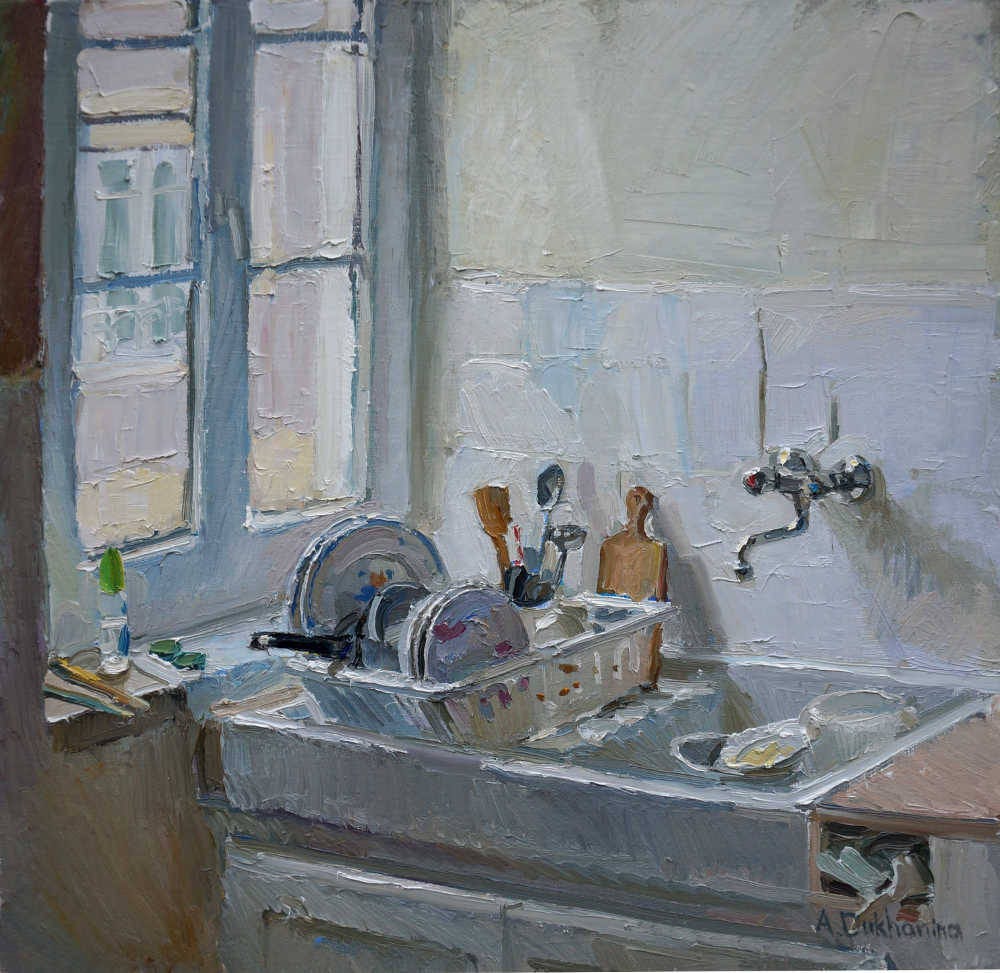
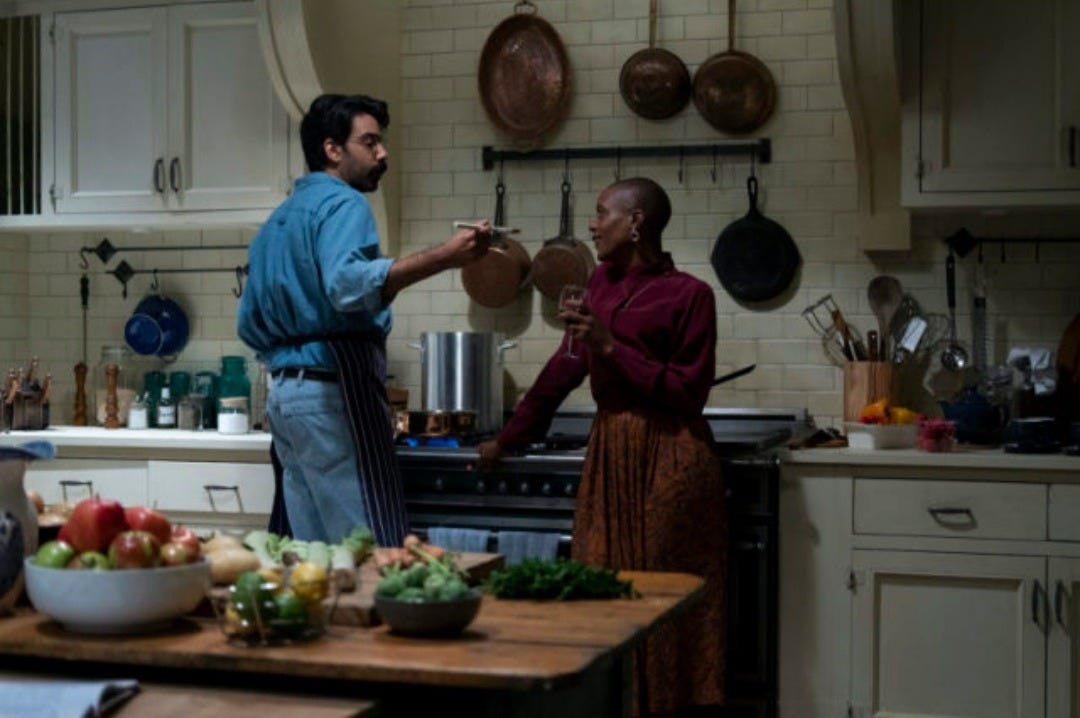
The nasty kitchen sink works in unison with the romantic kitchen table. The two create a dichotomy of unconditional love: the sensualness and beauty of a table full of homemade food, versus the dedication and rawness of handling sink scraps.
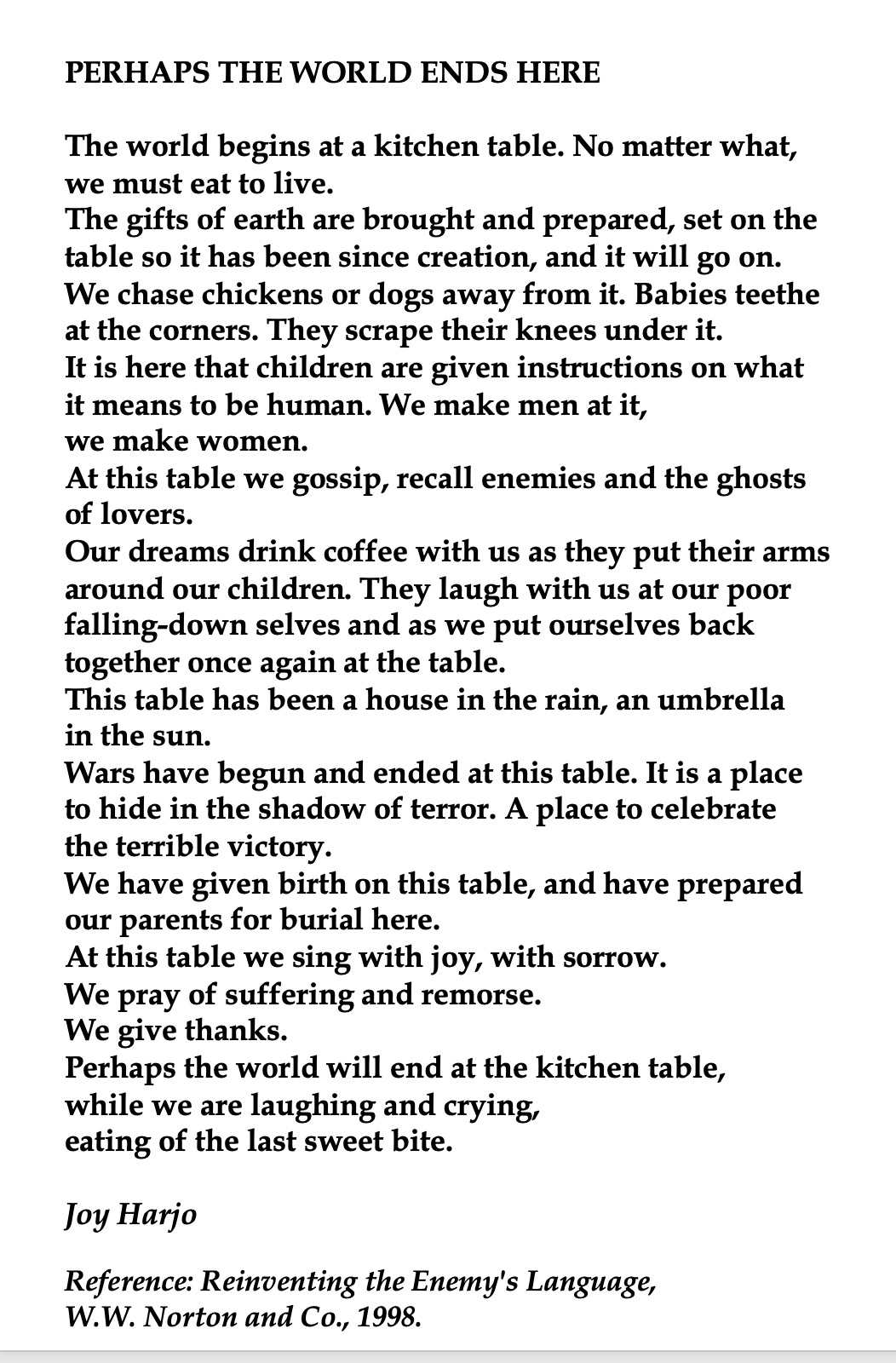
Stacey Balkun offers a wonderful analysis of the poem above by Joy Harjo. She says the kitchen table is a place of sustenance, life, and nourishment.
“No matter what, we must eat to live,” Harjo writes.
No matter what, we must endure the ritual of washing our plates to enjoy the splendors of the dinner table seated with the people we love. Be it months of cognitive behavioral therapy or my frontal lobe developing, but rewiring how I perceive chores, like dishwashing, has been essential to battling my depression.
One of my longest depressive episodes was in late 2020. I recall looking at my crumpled bed sheets in horror, because my body just couldn’t move to put them on. The same way your brain lets your hand hover over a hot stovetop but never make contact, mine wouldn’t let me up to shower. No matter how violently I tried to will it.
Changing my perception of these tasks did not alone allow me to do them, but they’ve been integral to reinforcing the behaviors. I go on walks around the neighborhood and do my laundry because it is a pleasure to have things outside to look at and continuously be able to wash clothes that I love to wear. I wash the dishes because I love my little brother.
To conquer the symbolic beast of a sink, that is, to roll up your sleeves and wash the dishes, is a radical act of love. Some might even suggest using a dishwasher is blasphemy, like Constance Wu’s character in Fresh Off the Boat (2015) when her kids find out the “drying rack” actually washes dishes.
“This family doesn’t believe in dishwashers… It's wasteful. It makes you soft.”
Of course I always rinse the dishes before putting them in the dishwasher, but I’m no stranger to the art of handwashing. I was recently, briefly, employed by Waffle House, and for the duration of my seven hour shift, I hand washed every dish in rotation. I no longer wince when I wash dishes anymore.
No payment for my one shift ever made it my way, but I really don’t care, it was just nice to make my ex-coworkers’ shift, at most, a bit easier that day. My hands were so pruny and dry by the time I got home, they looked like Hunter’s.
Dishwashing as a whole is a uniquely mundane expression of love. The act is a service to yourself, your housemates, loved ones, etc, but it’s also a form of meditation. I can’t hear the TV over the sound of running water, and it’s a hassle to deal with wet, wired earbuds.
So what do we think about when we do the dishes? Film and television tells us it needs to be something that detracts from the filthy task at hand.
Hilal, a Muslim girl living under Greek occupation in the 1920s is the lead of Turkish historical drama Vatanim Sensin/Wounded Love (2016). She falls in love with Leon, a Greek lieutenant, after saving her from being hanged and eventually detracting from the Greek military for Turkish independence. Hilal safely returns home after escaping the noose.
Hilal’s association as a “radical” and ties to an illegal anti-occupation newspaper that she operates under a pen name contribute to her character’s identity as formidable, with an almost Herculean spirit. She scarcely allows herself to succumb to the dangers and perceived weakness of her forbidden feelings for Leon. In letters never sent, Hilal briefly engages with her feelings. Or, while washing the dishes.
When she resumes her life at home after evading execution, Hilal moves her attention from washing the dishes to reminiscing how Leon so gallantly saved her life. This is the first moment in the show we see Hilal’s wall waver, revealing her true feelings and foreshadowing their love story to come.
When the two marry, they symbolically move past the obstacles preventing their budding relationship (the kitchen sink) and share a dinner table together, reflecting the beauty of their shared life after all the sacrifices the two made for each other.
My seven-time watch of the year, Emily (2022), a very loose biopic about author Emily Bronte’s life, similarly uses dishwashing to progress relationships. Emily first meets pastor William Weightman while her sisters do the washing up from Sunday brunch. Weightman walks in on Emily insulting his first sermon. The next time the two interact over dishes, their relationship has advanced. He finds Emily alone, washing dishes after a large dinner, and the two kiss for the second time (the first being in a rainstorm a few days prior).
Arguably, this kiss is more important than their first. Initially, Weightman and Emily acted impulsively on their lust, and Emily left assuming he would never speak to her again. Their second kiss over the sink is less theatrical. It’s intimate, sincere, and assures Emily his feelings are real.
Weightman dies from tuberculosis, prompting the heartbroken Emily to write the equally devastating Wuthering Heights (1847). The last time we see Emily cleaning the kitchen is when Charlotte Bronte storms in, both delighted and devastated after reading her book. This is the audience’s first vision of Emily’s imminent success.
Every time Emily is in the kitchen, she is seemingly doing the mundane, but the biggest plot advancers happen here. She (1) meets Weightman, (2) the two begin their relationship, and (3) her sister foreshadows Emily’s writerly acclaim. The progression mimics a British kitchen sink drama. The most extraordinary events in the movie are contingent upon love, loss, and sacrifice in relationships. Each can be directly associated with scenes taking place in the kitchen or at the table.
Emily and Weightman’s kiss at the sink is symbolically meaningful, but the literal act of holding hands in the murky, soapy basin reflects an offering of devotion to Emily. Sharing both the meal and the mess with someone is the beauty of unconditional love.
There’s a shockingly soft scene in the crime thriller, Catch Me If You Can (2002), where Leonardo DiCaprio’s fraudster lead, Frank Abagnale, watches an elderly couple dancing to Judy Garland while drying dishes together.
Cleaning anything together is inherently intimate because it implies mutual care. I think of the Losers Club in It (2017) cleaning Beverly’s blood-soaked apartment before her dad sees it.
Or Danielle and Maya in Shiva Baby (2020) erotically cleaning up vomit from the carpet. Their literal closeness reminds them both of their past intimacy, rekindling their romance.
Keeping things dirty, like a full kitchen sink, can also be a tool to reflect disconnect. Kitchen sinking, or to “throw everything in but the kitchen sink”, refers to arguments or complaints that encompass every grievance a person has against the other. This may be having a bad day at work and unloading all those grievances at once when you get home. This could be leaving fruity pebbles behind in your bowl to harden (something I did today, celebrities are people too y’all) because “you’re a poor communicator and bad with money and jealous of his success”. Whatever it may be, psychologists generally agree that kitchen sinking in relationships of any kind can be detrimental.
Broken dishes alone have been used to symbolize disconnection. A uniformly set table represents togetherness, so must broken tableware represent distance. Yin and yang.
In episode six of Normal People (2020), Marianne and Connell are in a relationship, but over the course of the six-week period the episode covers, poor communication, again, proves to be the killer of their relationship. At the beginning of the episode, we get a glimpse of the two sharing breakfast together in Marianne’s kitchen, but a six-week flashforward shows Connell storming out of the house and Marianne shakily holding a glass of water, shattering it when it slips out of her hand.
Two episodes later, Marianne is in a tumultuous new relationship with Jamie, a classmate from college. A vacation in Italy turns awry when Marianne confronts Jamie’s on his poor behavior in the kitchen. Jamie suggests she have a drink to calm down, pouring a glass of wine and letting the cup shatter to the ground. Their relationship ends there.
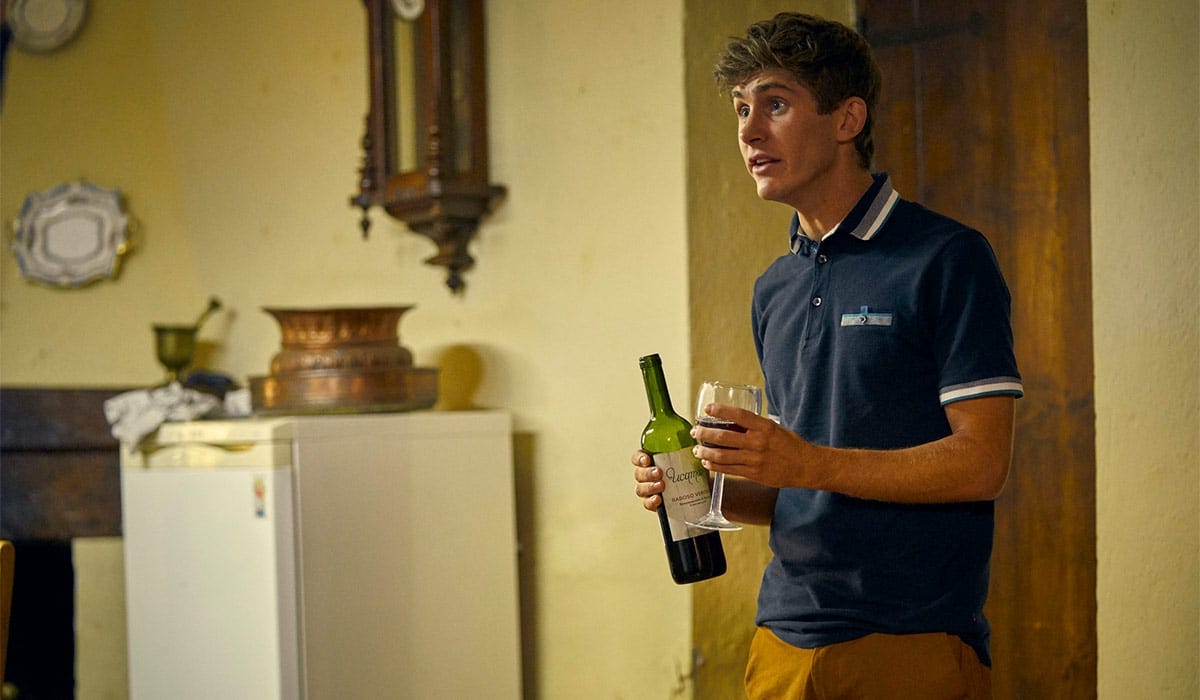
For someone like Marianne, home and especially the heart of the home (kitchen) is a place of instability for her. The physical destruction of glassware forces Marianne to come to terms with her dysfunctional family and fear of loneliness.
Marianne is convinced she is undeserving of love because of her family, which is why both the most romantic and heartbreaking scenes revolve around care of some sort. Marianne’s happiest moments with Connell are when she’s at Christmas dinner with his family or cooking for her friends. Her lowest being when her family berates her in the low light of their gray kitchen or when glass shatters. At her core, all Marianne wants is to be cared for.
I’ve seen enough women wanting to be loved in ways that ease, rather than jolt. That’s not to inspire a lack of romance or passion, but rather invite a priority of mundane expressions of love.
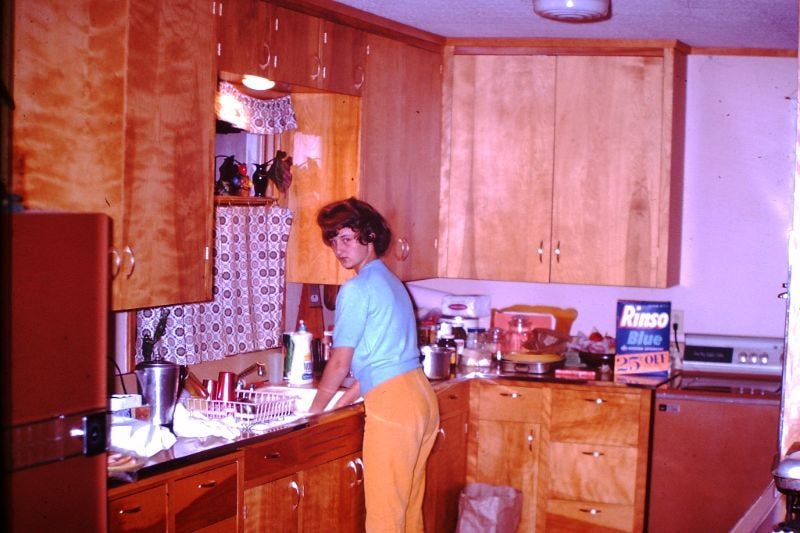
People need partners, friends, and family members to be capable of long-term love. Grand gestures can be sweet, but simple, effective acts of service are essential in maintaining a long-lasting partnership. Doing the dishes may seem like such an inconsequential chore, but it is symbolic of the person and relationship as a whole.
A lot of people will say love is supposed to be easy. I reject this. So long as we’re dealing with other complex human beings, nothing about our interactions will be easy. Tirelessly and constantly, we must remind ourselves to try.
No, love is not easy, but it is simple. It is formulaic. It’s knowing what groceries they like. It’s buying flowers because it’s Tuesday and you felt like it. It’s watching someone’s favorite movie to learn why it’s their favorite. It’s doing the dishes because it grosses him out.
Fleabag asked her sister Claire if the love she had for her boss was a “running through the airport kind of love”.
I’ve adopted my own version: is it a ‘doing the dishes’ kind of love?

LOVE SONG ALERT!!!!
Connie Converse: There is a Vine